Posts

Showing posts with the label gloss

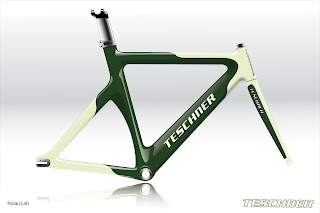
Track Bike Frame Rendering: Teaching Adobe Illustrator for ID
Image
I've been teaching Adobe Illustrator to the Western Industrial Design sophomore students for six years now.  It's a powerful tool for doing design renderings.  Here's a few examples from last fall of some track bicycle frames.  The original line art is from the Teschner bicycle company.  I challenge the students to design the graphics, add reflections and shading, and play with different materials.  That way, they aren't spending time on the frame shape and can concentrate on the color and rendering.  The main Illustrator tools being used here are: the pen tool, adjusting the transparency and blending modes, stylize feather, blur, clipping masks, and lots of gradient manipulation.  These are all sophomores (2nd year students).   by Nolan Leh   by Elijah Hooper by Ryan Hume by Anna Perrela by Paul Linden

Color in Industrial Design (part 3)

Image
Color as form emphasis Color can be used to emphasize the physical form, and to enhance the surface variation or three-dimensionality. This application is not dependent upon culture, but rather is based on how our minds process visual information. Our eyes equate value variation with surface variation. When this variation is pronounced through color its three-dimensional form is enhanced. comparing similar forms with high and low value colors. Photo by Jason Morris Considering the range of value possible on a form’s surface, more contrast can occur with light (high value) colors, especially white. However, a dark color such as an 80% gray has only a small range of value to exhibit until it’s fully black. So the perceived value change is small. The example below shows how the value change in the white bumper exhibits its curvature. However the dark blue bumpers curvature is hard to see, since its value remains mostly constant and is confused by reflections. ...